Genesis Series IV
This work marks a shift within the Genesis Series, where dispersed energy begins to organize into a more stable internal order. Light is no longer wandering unpredictably, but gradually aligns with structure, forming a quiet rhythm between containment and emergence. The piece exists not as a fixed object, but as a moment in which life begins to regulate itself—finding balance between flow and form.
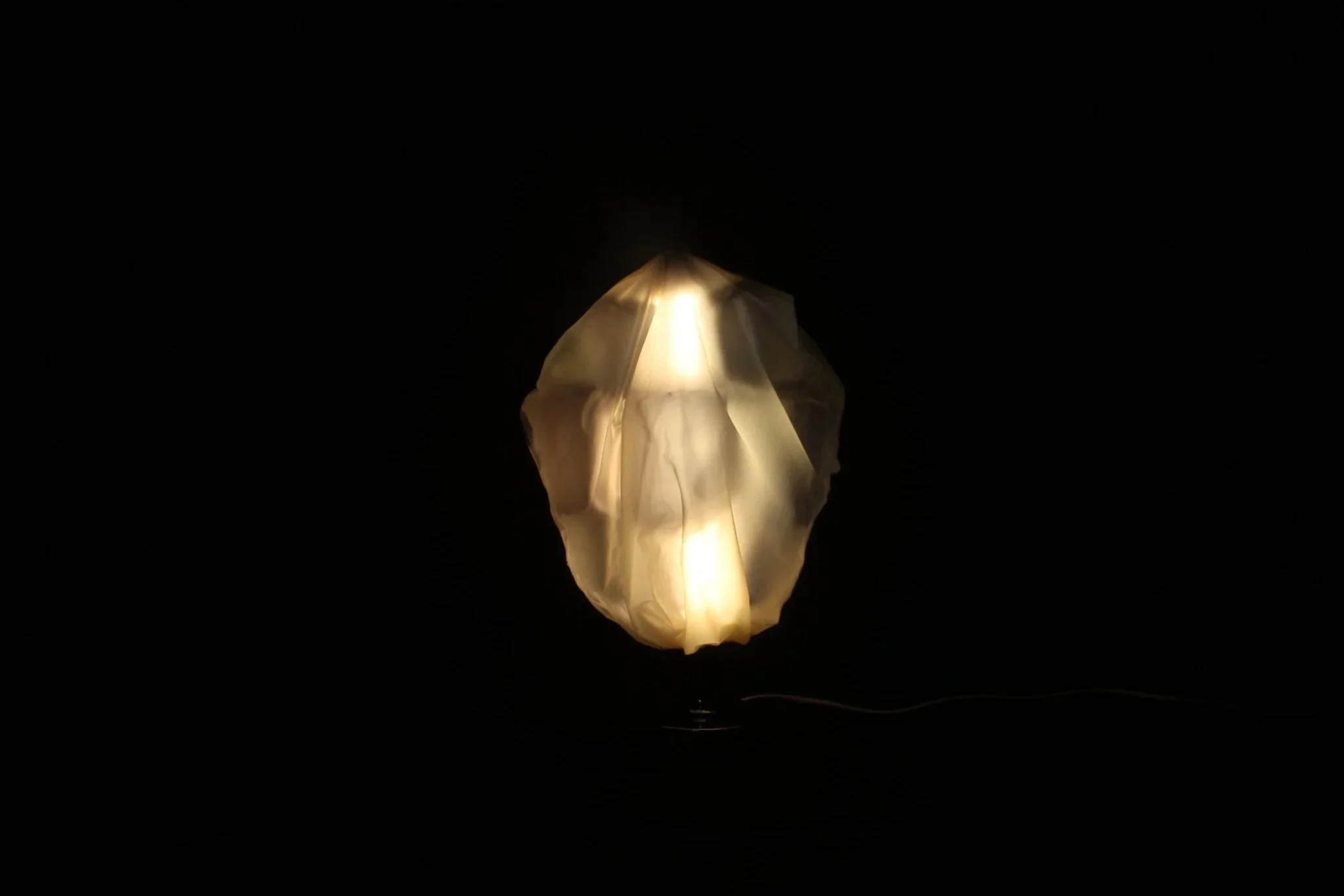
Genesis Series IV
In darkness, the light appears more evenly distributed, radiating a soft and continuous orange glow. Unlike the previous piece, where light moved in fragmented paths, here it settles into a more coherent presence. The illumination feels anchored, as if guided by an underlying structure that is no longer hidden, but quietly directing the flow.
The internal blue column, together with the embedded light elements, creates a subtle sense of order. Light does not escape or scatter—it circulates with restraint, suggesting a stage where energy begins to stabilize and sustain itself.
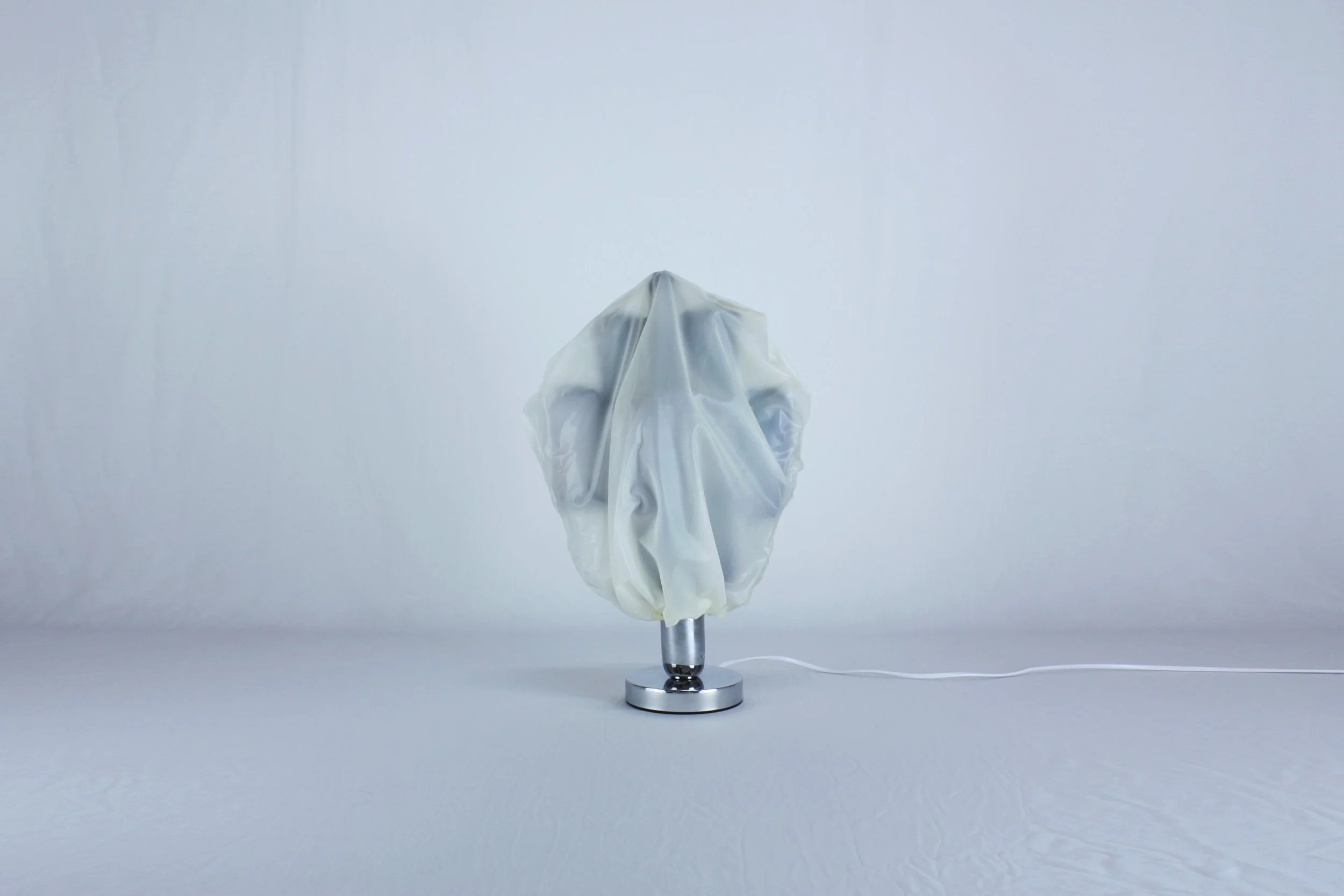
Genesis Series IV
When unlit, the form reveals a clearer structural logic. The central blue column stands more defined, holding the surrounding membrane in a controlled tension. The outer bio-plastic skin gathers and folds around it, creating a balance between compression and release.
Compared to earlier pieces, the relationship between inner structure and outer membrane feels less accidental and more intentional—hinting at the emergence of an internal system.
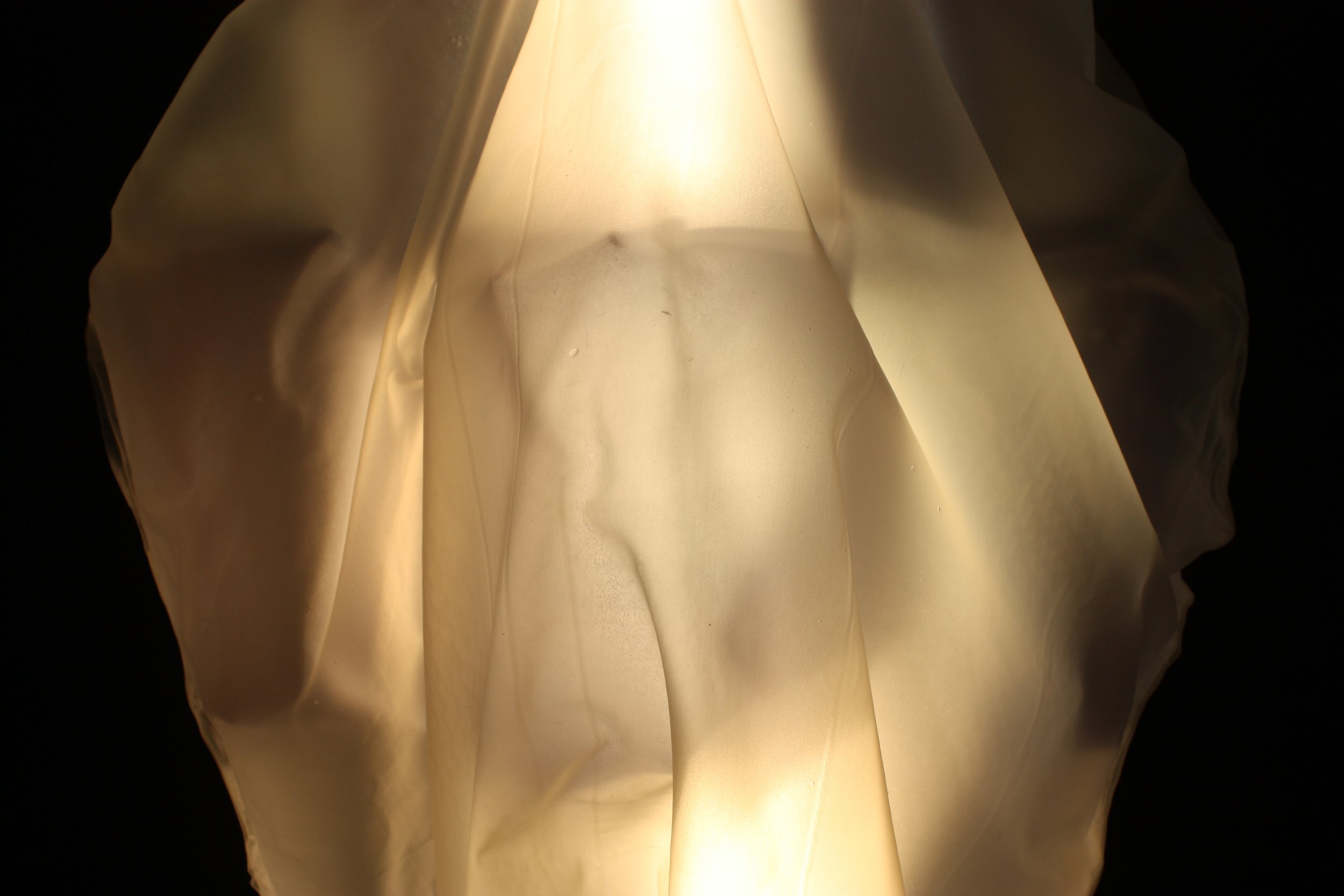
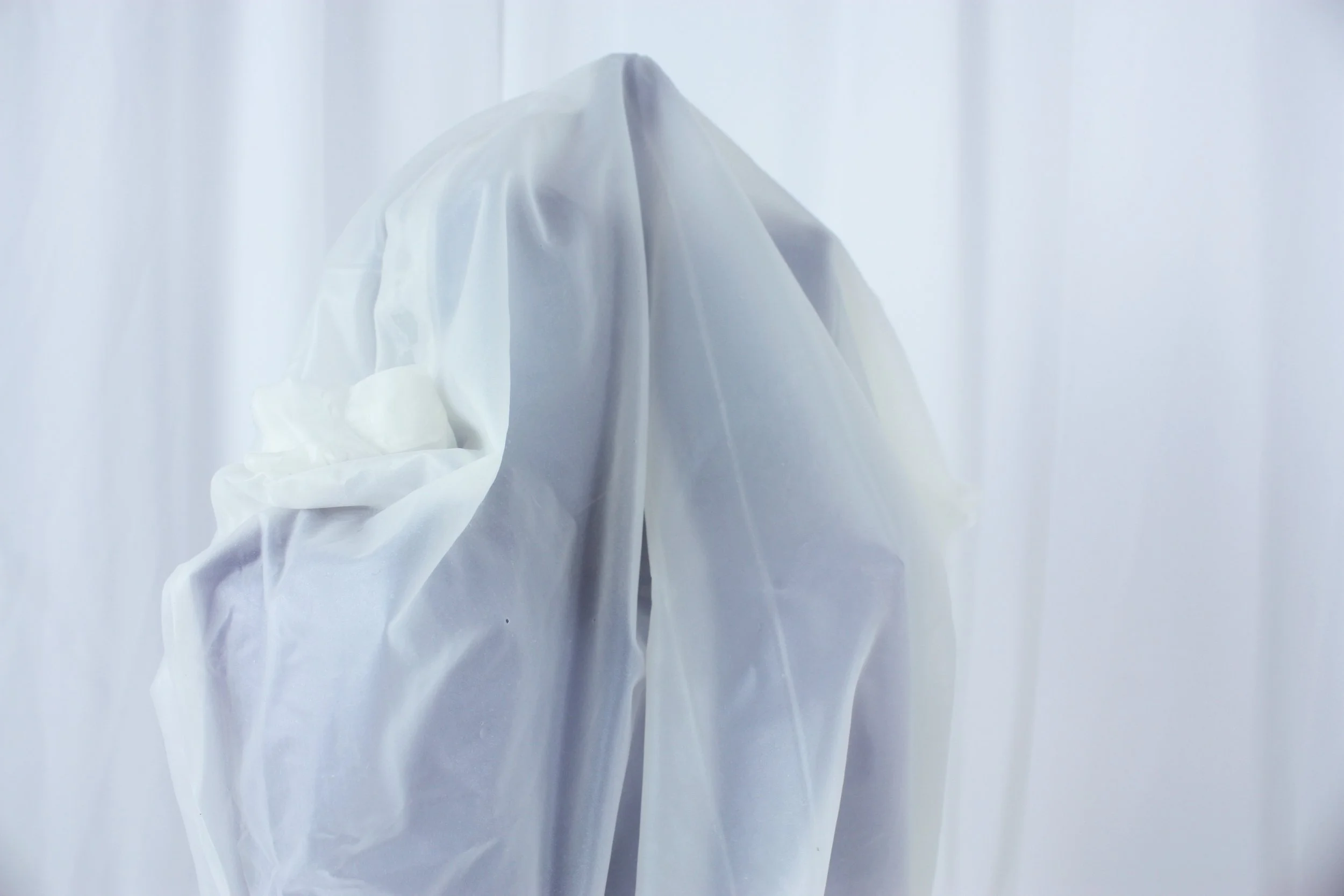
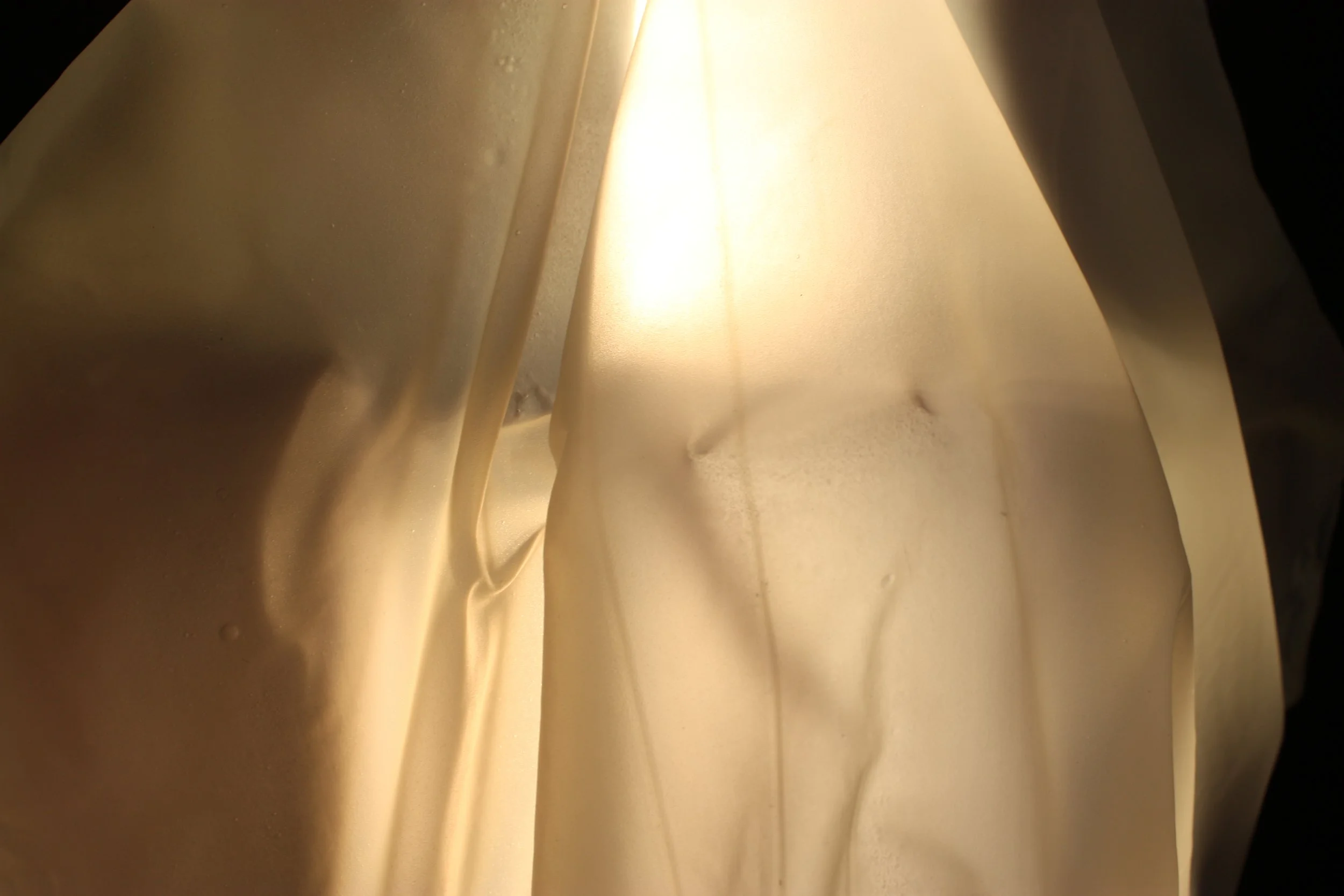
Across the surface, the bio-plastic retains its delicate irregularities—small bubbles, subtle textures, and variations in thickness. Yet here, these details appear less chaotic and more integrated into the whole. Light, when present, moves through them with a softer consistency, producing a gentle diffusion rather than sharp contrasts.
The internal elements—both the rigid column and the embedded light bulb—suggest a network that has begun to organize itself. Instead of scattered pathways, they form a quiet coherence, like a body developing its own rhythm of circulation.
Shadows and reflections remain subtle, but more stable, reinforcing the sense that the piece has entered a phase of equilibrium.
As the hand presses against different areas, the contrast between rigidity and softness becomes more pronounced. The central structure resists, while the surrounding membrane yields. This interaction reveals a layered condition—one of protection and constraint, flexibility and support.
The piece responds through material tension rather than movement, inviting the viewer to sense structure not visually, but physically.
In this piece, light and structure begin to align. What was once dispersed now finds rhythm; what was unstable begins to settle. It captures a stage of life where growth turns inward, forming its own logic—quietly, steadily, and with an emerging sense of order.
