Genesis Series Overview
Genesis Series Overview
The Genesis Series originates from a simple yet recurring question:
How does life begin?
Rather than addressing this question through a biological lens, the series approaches it through form, material, and light—seeking a state of becoming rather than a definitive answer. Within this process, the structure of the egg emerged as a fundamental point of departure.
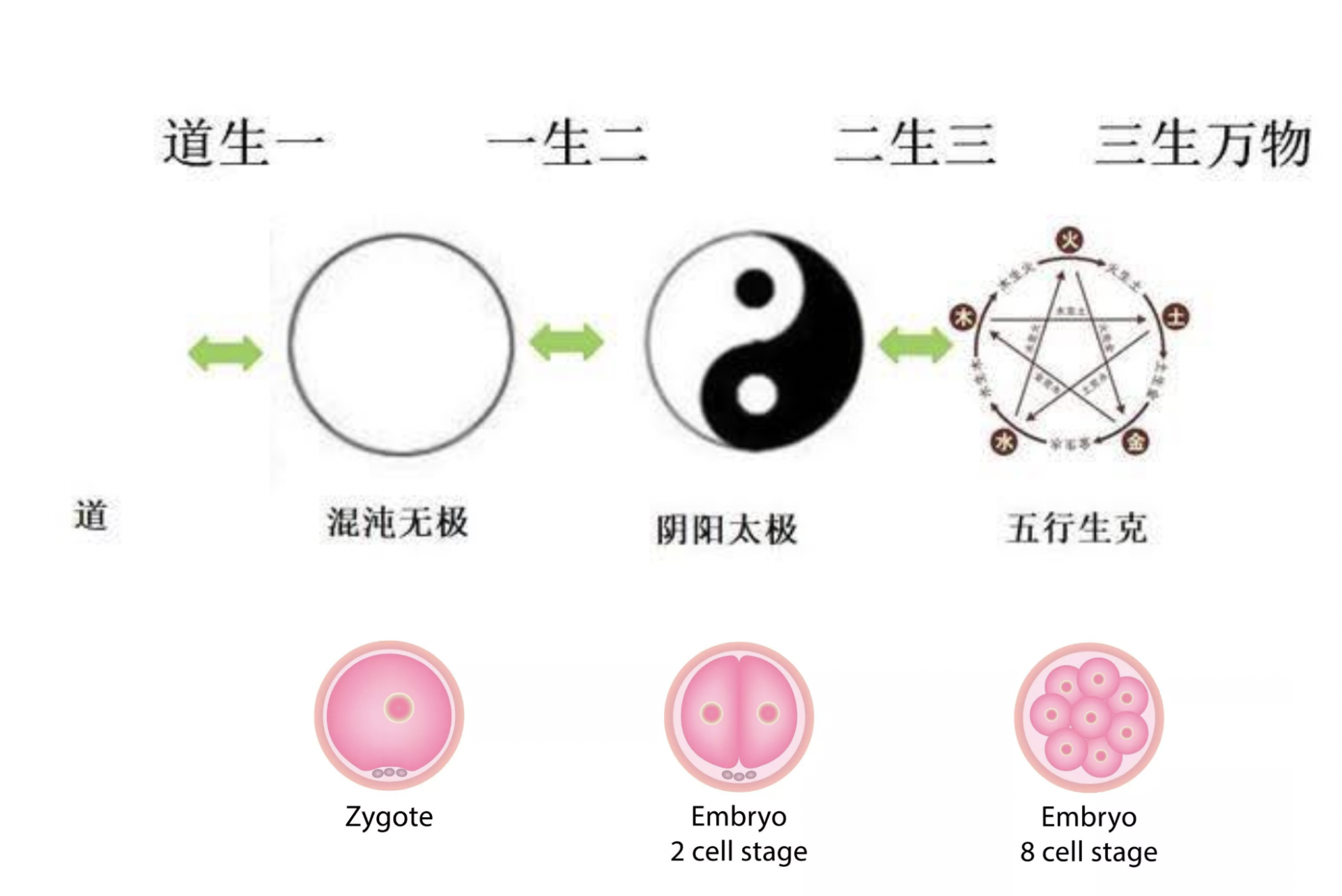
The differentiation of a fertilized egg is not linear. It unfolds through continuous division, expansion, and reorganization.
This mode of generation resonates deeply with the Taoist concept of “One gives birth to Two, Two gives birth to Three, and Three gives birth to all things.” The world is not constructed in a single moment; it gradually reveals itself through ongoing formation.
The Genesis Series evolved from this line of thought.
It is not a single object, but a growing system.
Central to this system is a recurring reflection on protection and vulnerability. Conventionally, an egg is understood as a hard shell protecting a soft interior. In Genesis, this structure is deliberately inverted:
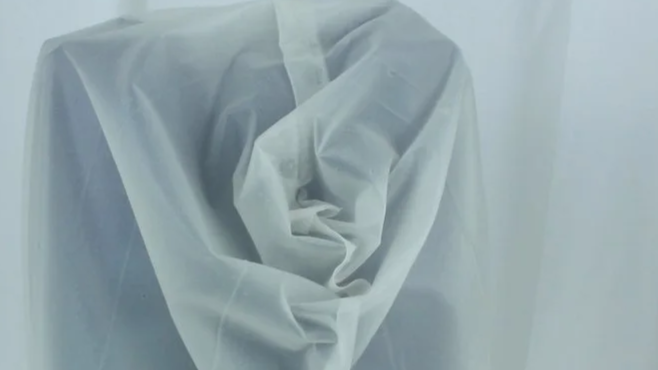
the internal elements establish relative rigidity and order, while the exterior remains soft, fragile, and mutable.
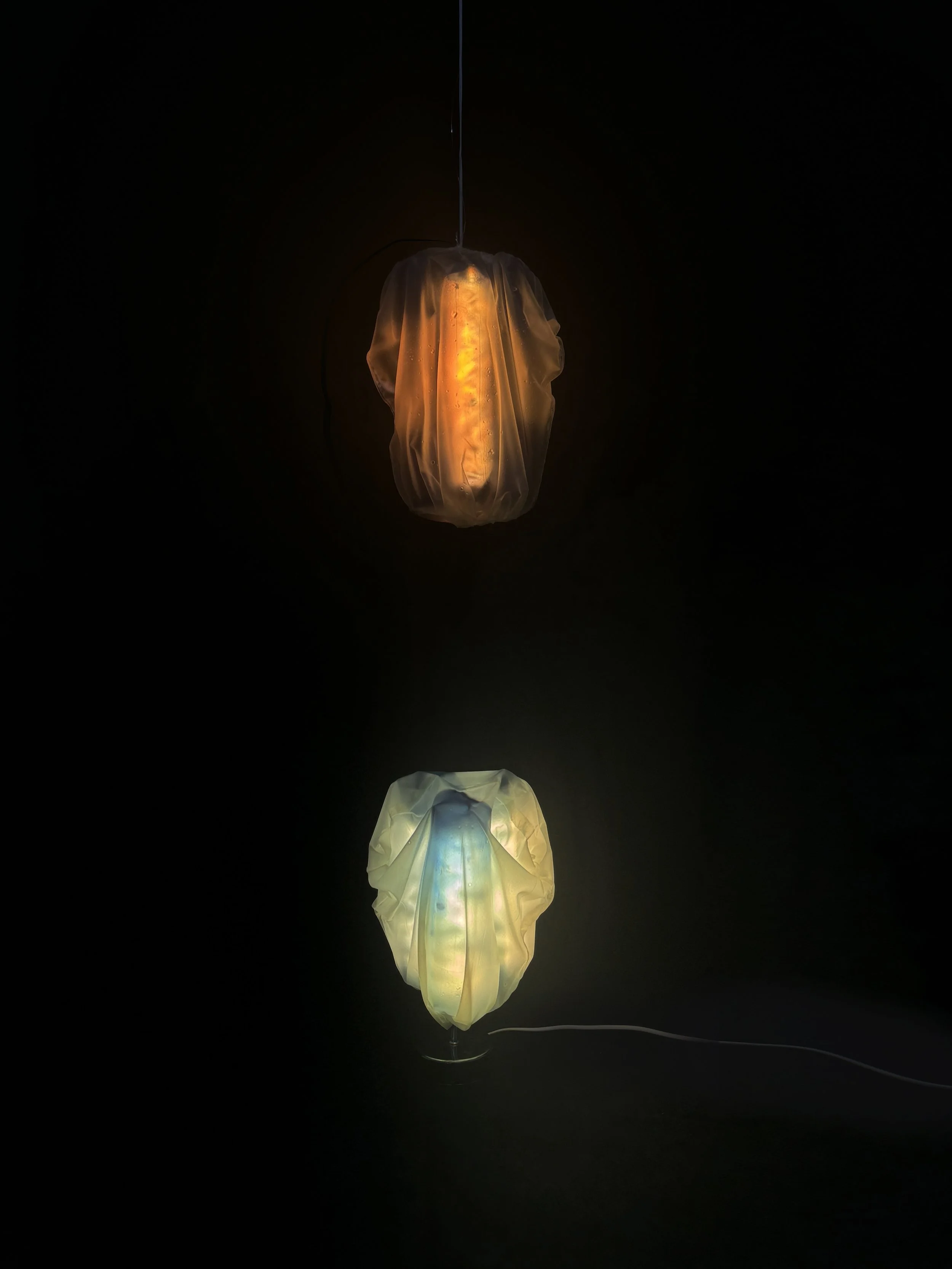
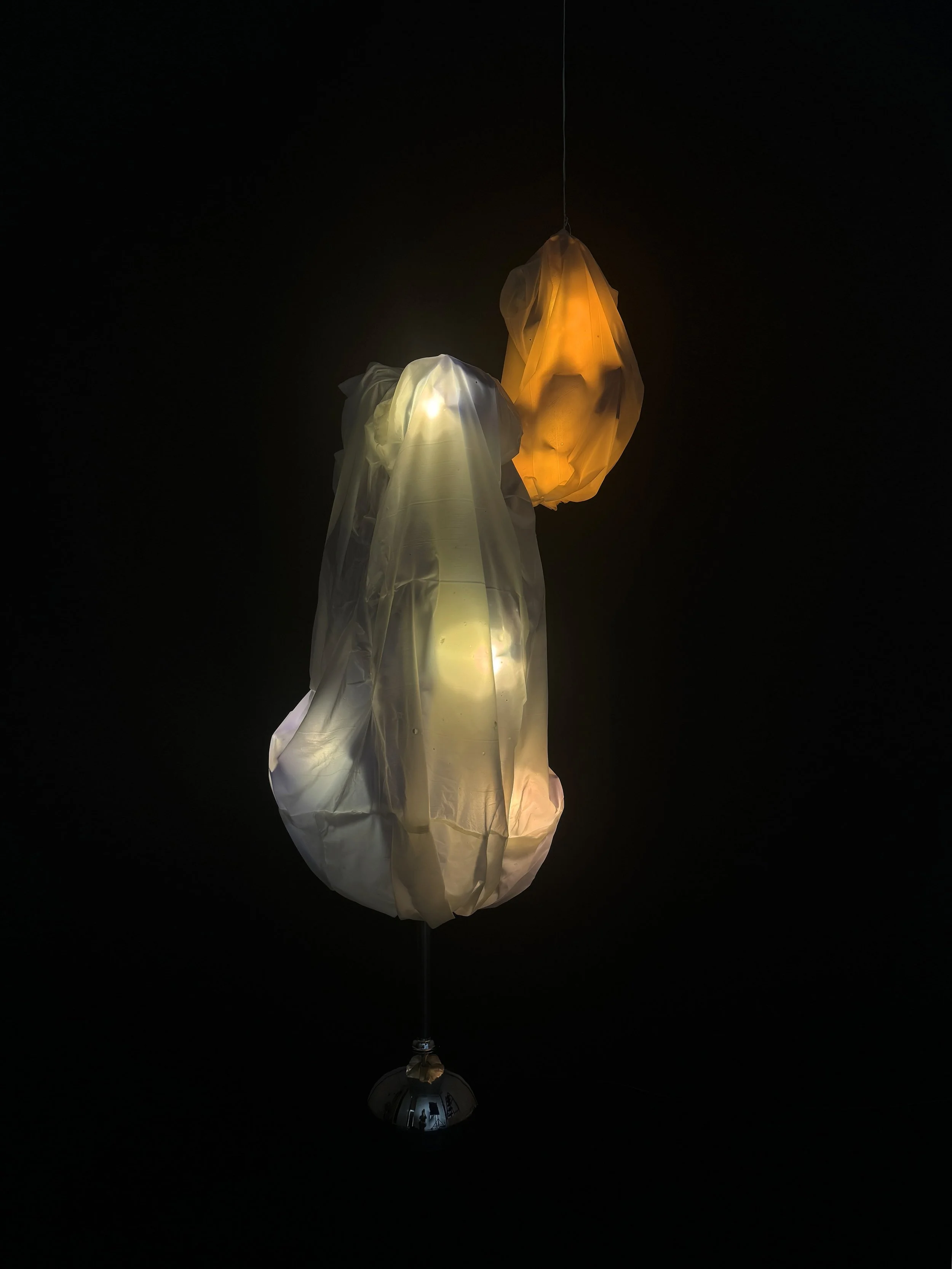
This inversion is not merely formal. It represents a shift in perspective.
When softness is exposed and rigidity is concealed, roles become unstable. What truly provides support? What bears risk? It is within this ambiguity that the work invites contemplation.
Material plays an active role in this exploration. The softness, translucency, and unpredictability of bio-plastic naturally produce folds, bubbles, and variations in thickness during the making process. These irregularities are not corrected, but embraced—becoming traces of formation, much like life itself, which grows through deviation rather than perfection.
The Genesis Series remains ongoing. Lamps of varying scales—table lamps, pendant lamps, and floor lamps—are not treated as isolated designs, but as manifestations of the same generative system, appearing in different phases and postures.
They do not point toward a final form. Instead, they exist as moments in flux—where growth is unfinished, structure is still negotiating, and softness and rigidity continue to rely on one another.
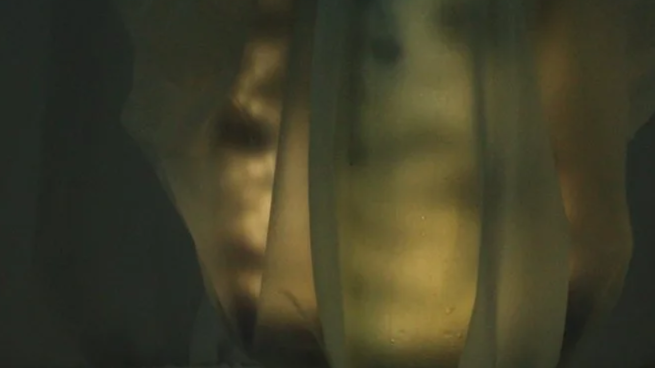

Genesis is not about an outcome, but about the act of beginning.