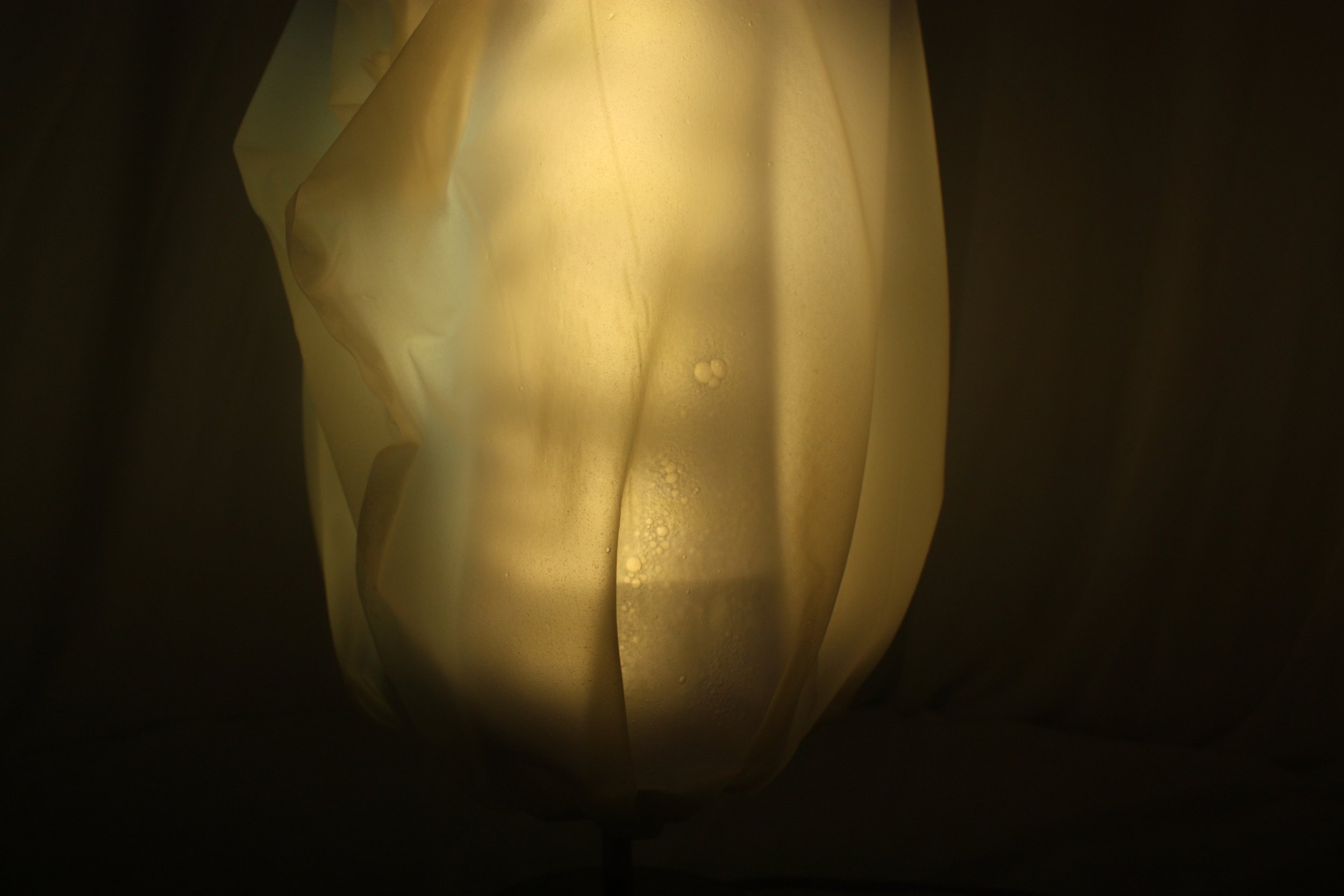
Genesis Series II
Genesis Series II
If Genesis Series I represents an initial core of life, Genesis Series II reflects a moment after generation has begun.
Here, the center is no longer singular.
Light shifts from a single axis to multiple parallel sources. Order starts to differentiate, and structures begin to relate to one another. Three luminous columns coexist through intertwining paths, evoking a state between life and energy—suggestive of cellular division, replication, and continuous growth.
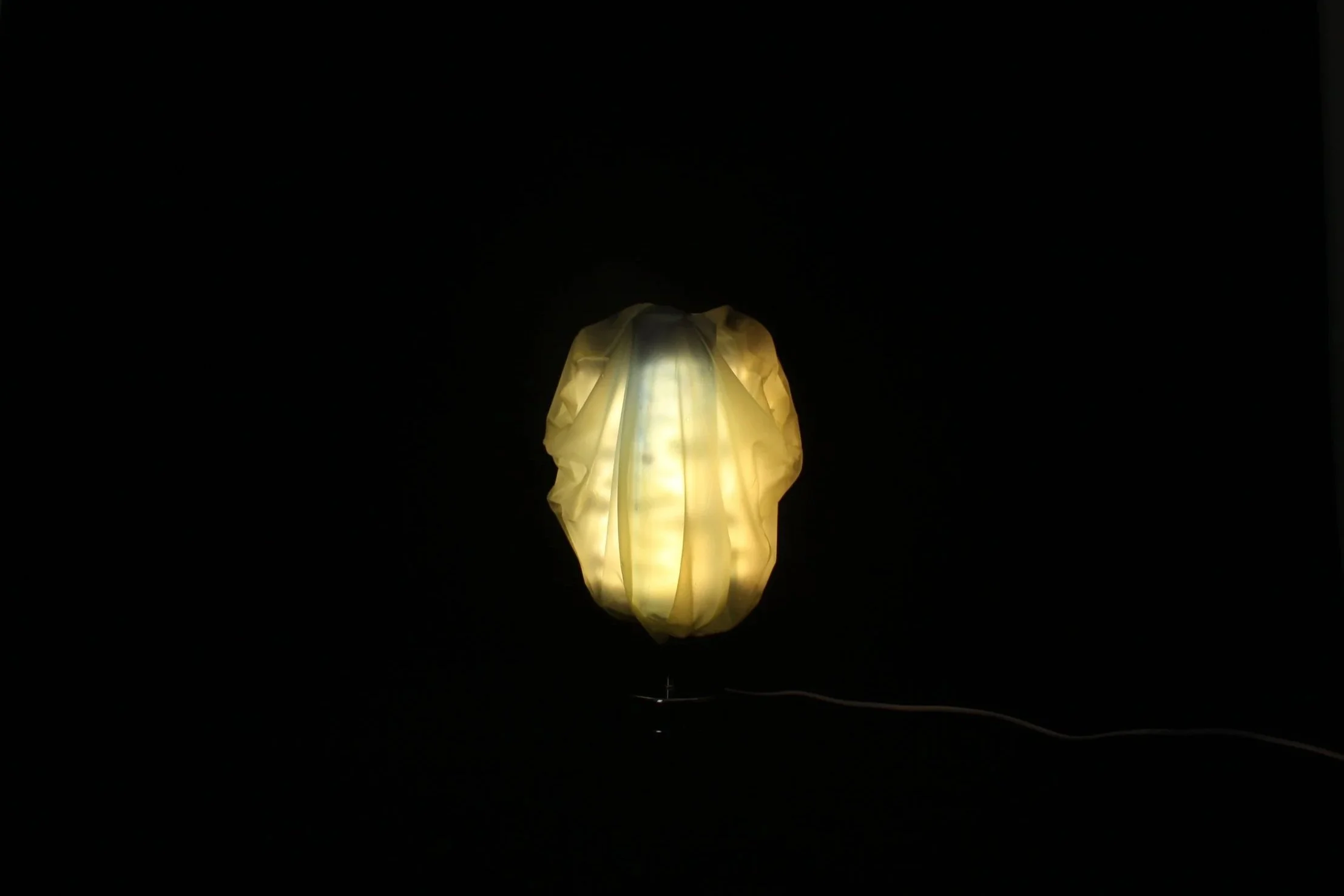
Genesis Series II
In its unlit state, the lamp maintains a quiet and compact presence.
Its internal structure consists of three vertical columns made of relatively rigid blue bio-plastic, forming the core framework of the piece. A continuous LED strip is wrapped around each column, creating restrained spiral lines.
Encasing this structure is an extremely soft, semi-transparent white membrane. Where the membrane comes into contact with the rigid core, it is gently lifted, allowing glimpses of the blue structure beneath. These moments of contact are not precisely controlled but emerge naturally through material behavior, introducing a subtle tension to the overall form.
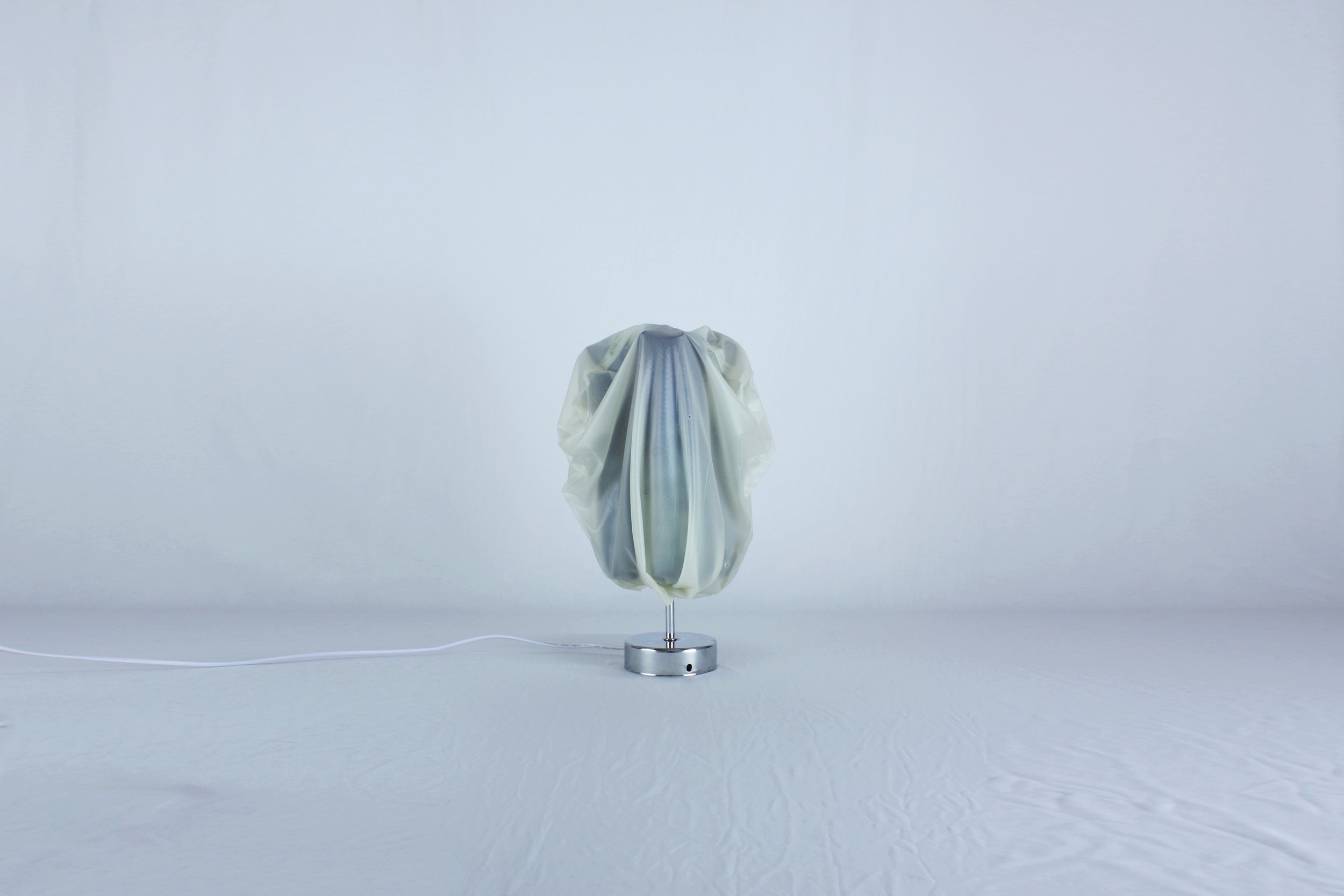
Genesis Series II
When illuminated, the three spiraling light columns reveal their full character.
Light travels along the wrapped LED strips in a helical motion, producing an effect reminiscent of mitochondria or DNA helices. Rather than dispersing evenly, the light circulates internally—overlapping, intertwining, and continuously moving.
This illumination feels less like a source of light and more like a process in motion.
It suggests the rhythm of life as it differentiates, replicates, and reorganizes itself, giving the lamp a sense of ongoing activity.
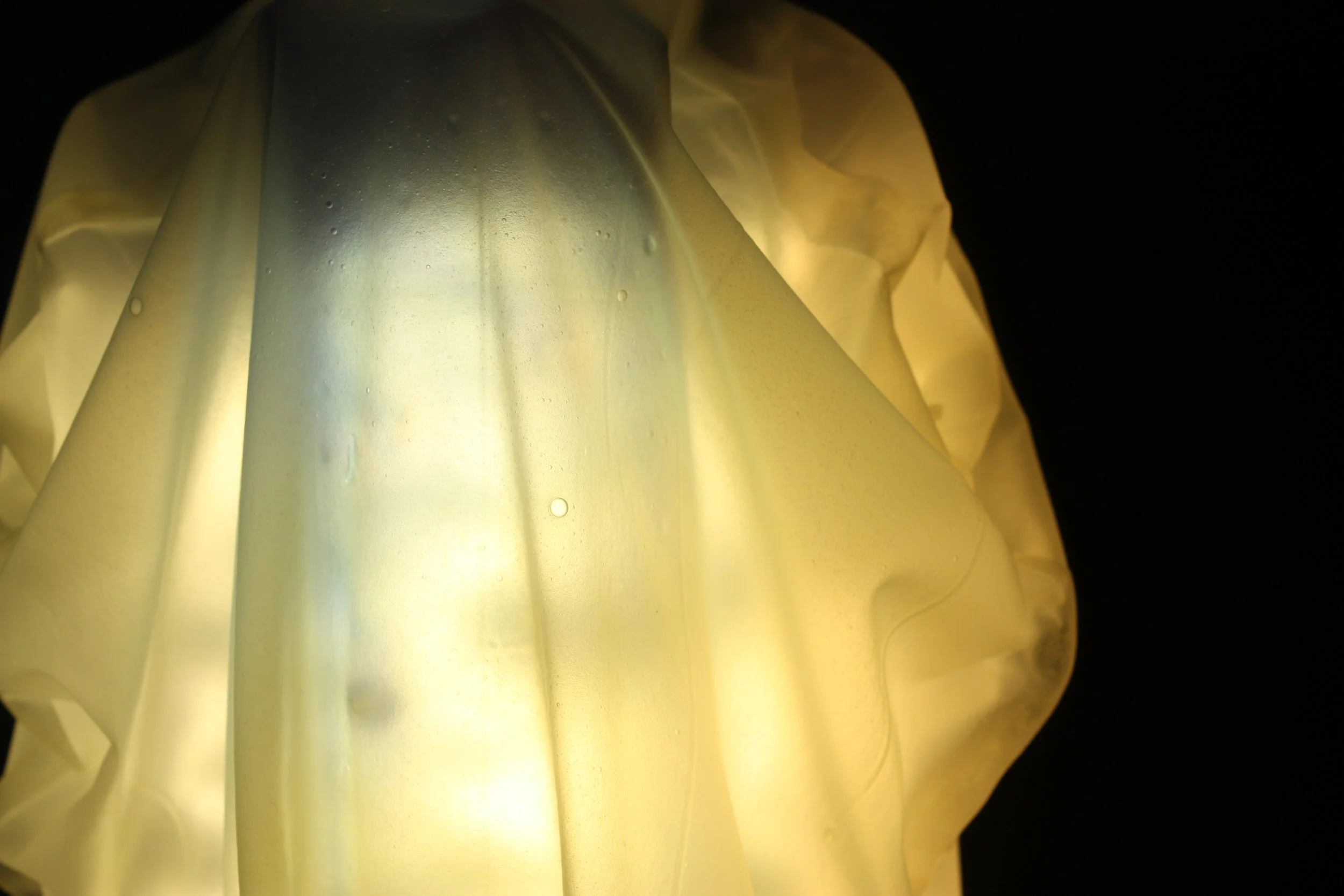
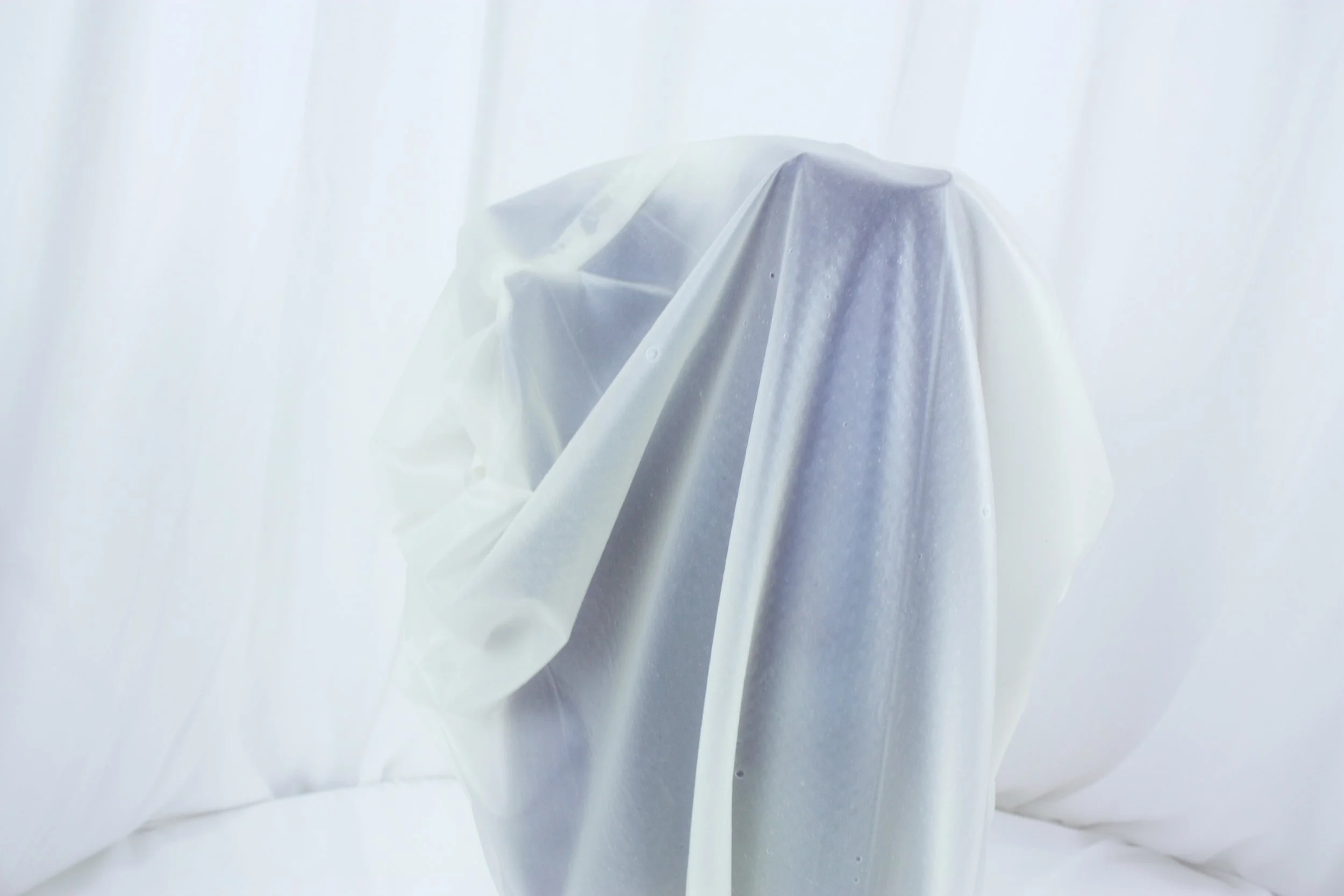
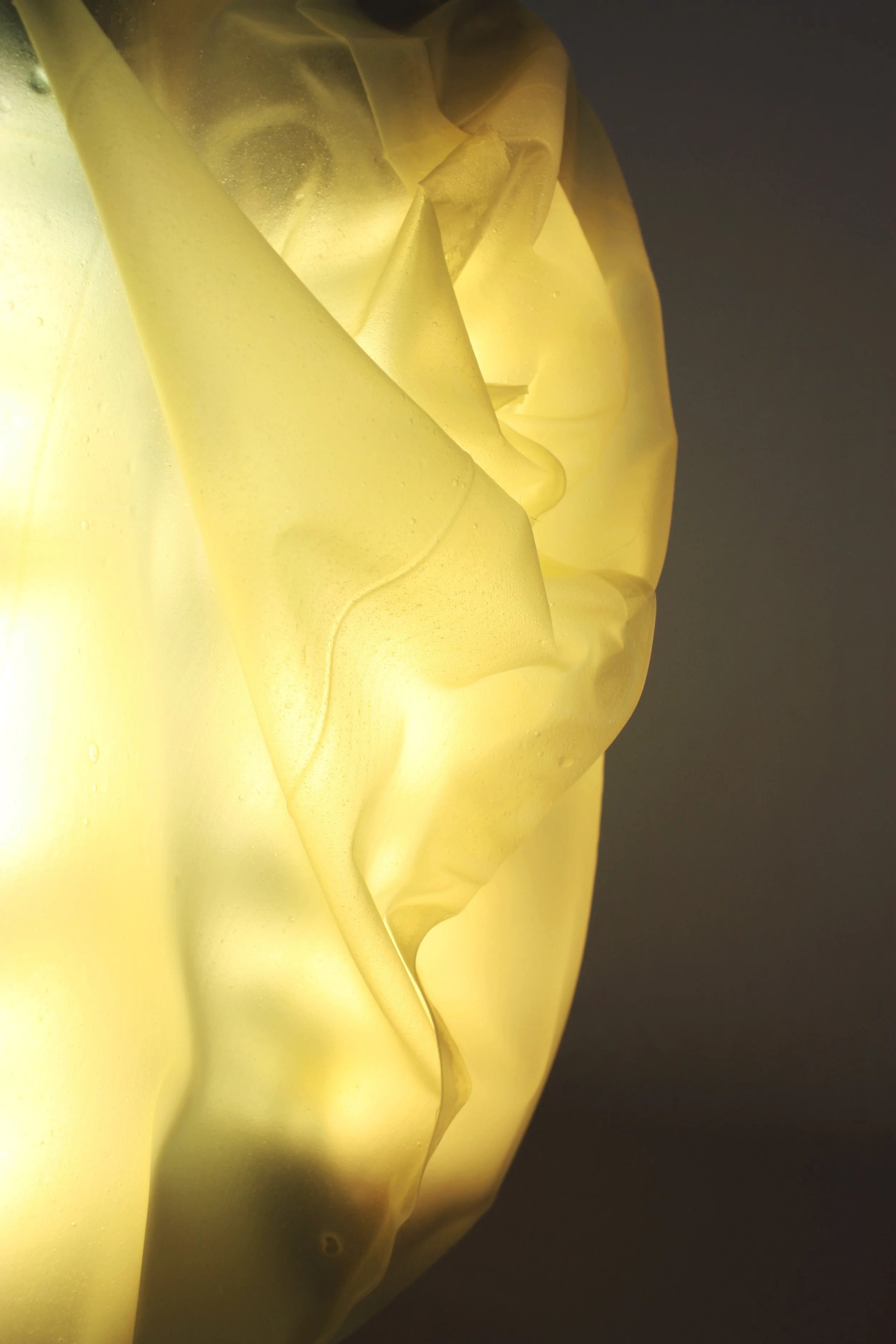
At points of contact, the outer membrane is gently pushed outward by the internal structure, forming irregular elevations. These become subtle windows through which the blue columns and spiraling light can be perceived.
Genesis Series II is not a repetition of the first lamp, but an evolution.
From a single core to multiple light sources, from a static center to intertwining structures, it marks a transition from mere existence to active generation.
At this stage, order begins to differentiate without collapsing, and softness and rigidity continue to rely on one another—supporting a form that is still in the process of becoming.