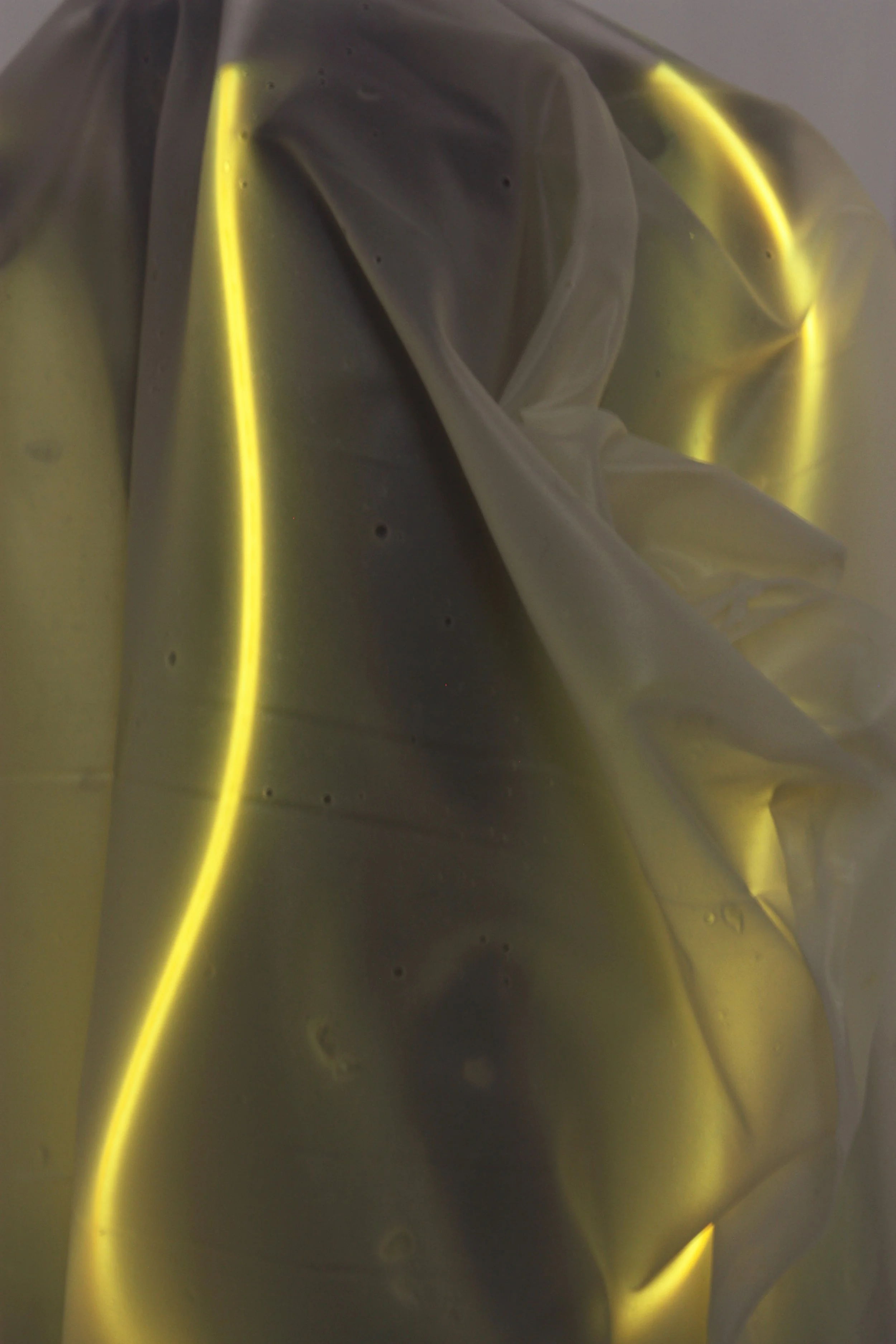
Genesis Series III
Genesis Series III
This work continues the Genesis Series’ exploration of life as a process of emergence, circulation, and quiet transformation. Light is no longer contained in a single core, but begins to disperse—threading through layers of material, appearing and disappearing, as if tracing the invisible structure of a living body. Rather than a defined object, it exists as a field of relations between light, membrane, and space.
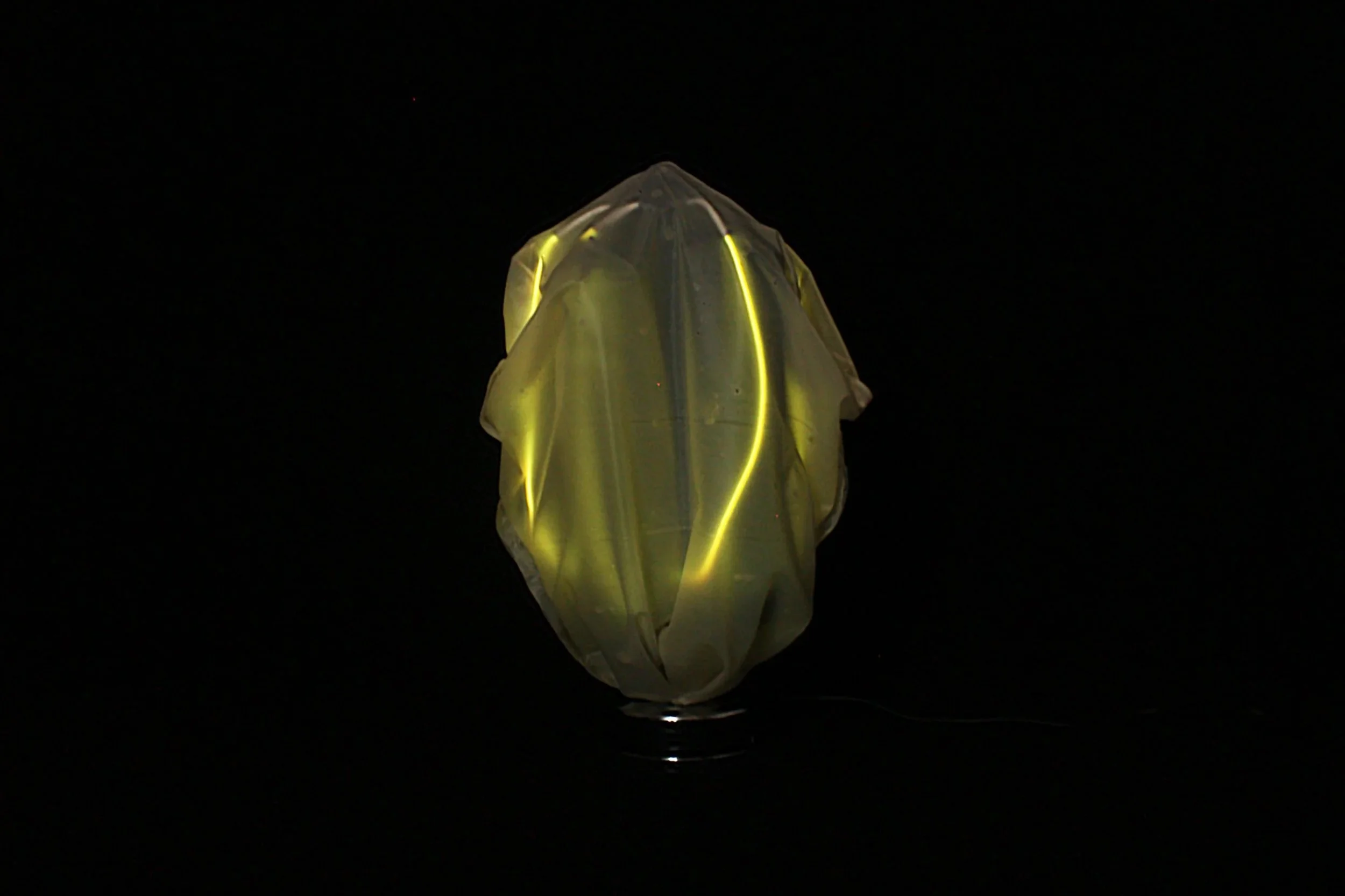
Genesis Series III
In darkness, a single strand of yellow light surfaces near the skin of the piece. It appears almost detached from the structure, floating along the membrane like a pulse made visible. The light does not fully reveal the form; instead, it suggests an inner network—fragmented, shifting, and alive.
The dispersed LED lines, some embedded within the blue inner column and others suspended between the column and the outer membrane, create a layered depth. This arrangement evokes a sense of circulation, as if energy is moving through different levels of a body.
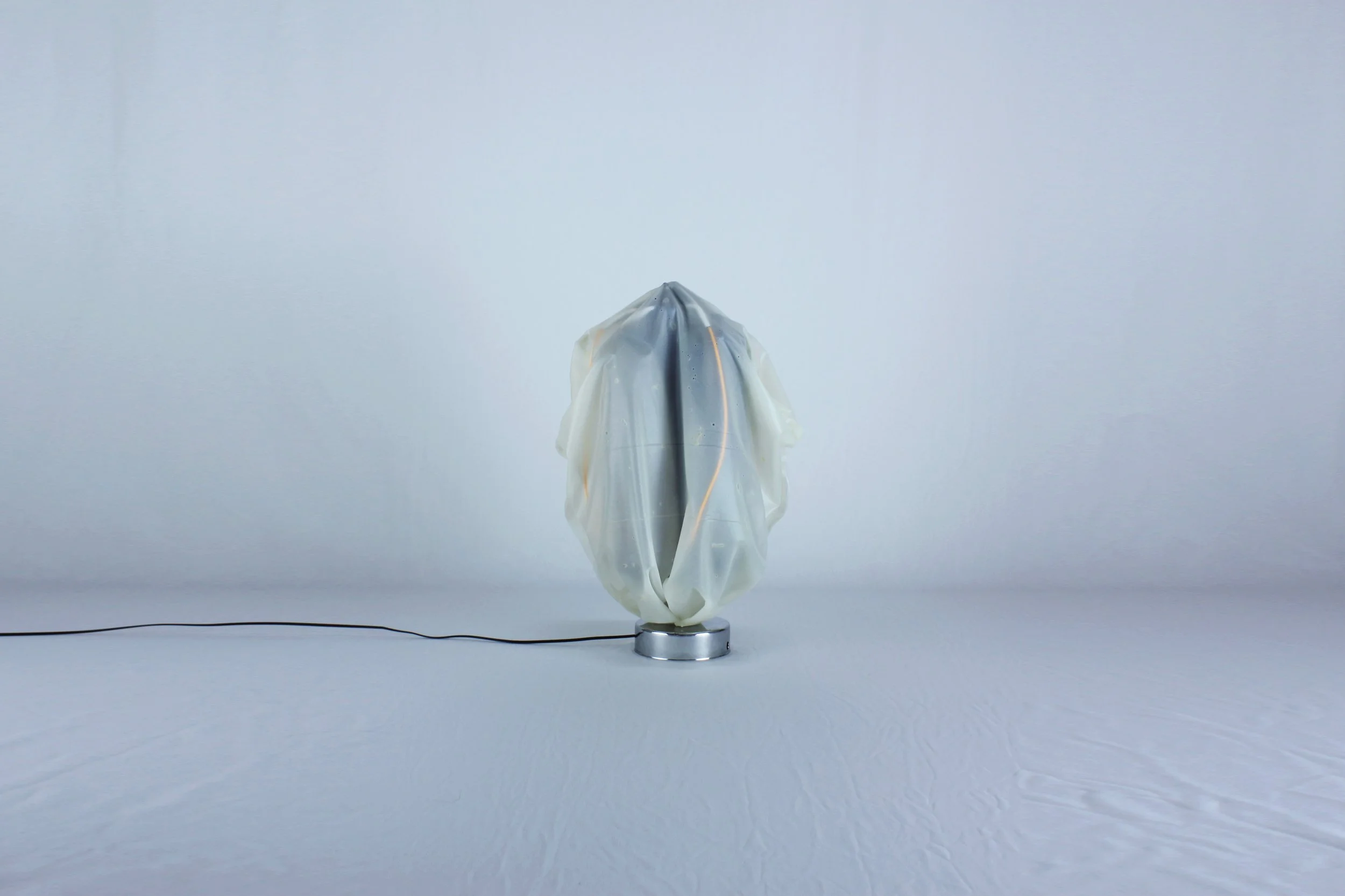
Genesis Series III
When unlit, the piece shifts toward a sculptural presence. The internal structure becomes more legible: a central blue column wrapped and softened by a translucent white membrane. Without illumination, the object appears still and contained, like a body at rest.
The contrast between inner rigidity and outer softness suggests a tension between structure and vulnerability—between what supports life and what protects it.
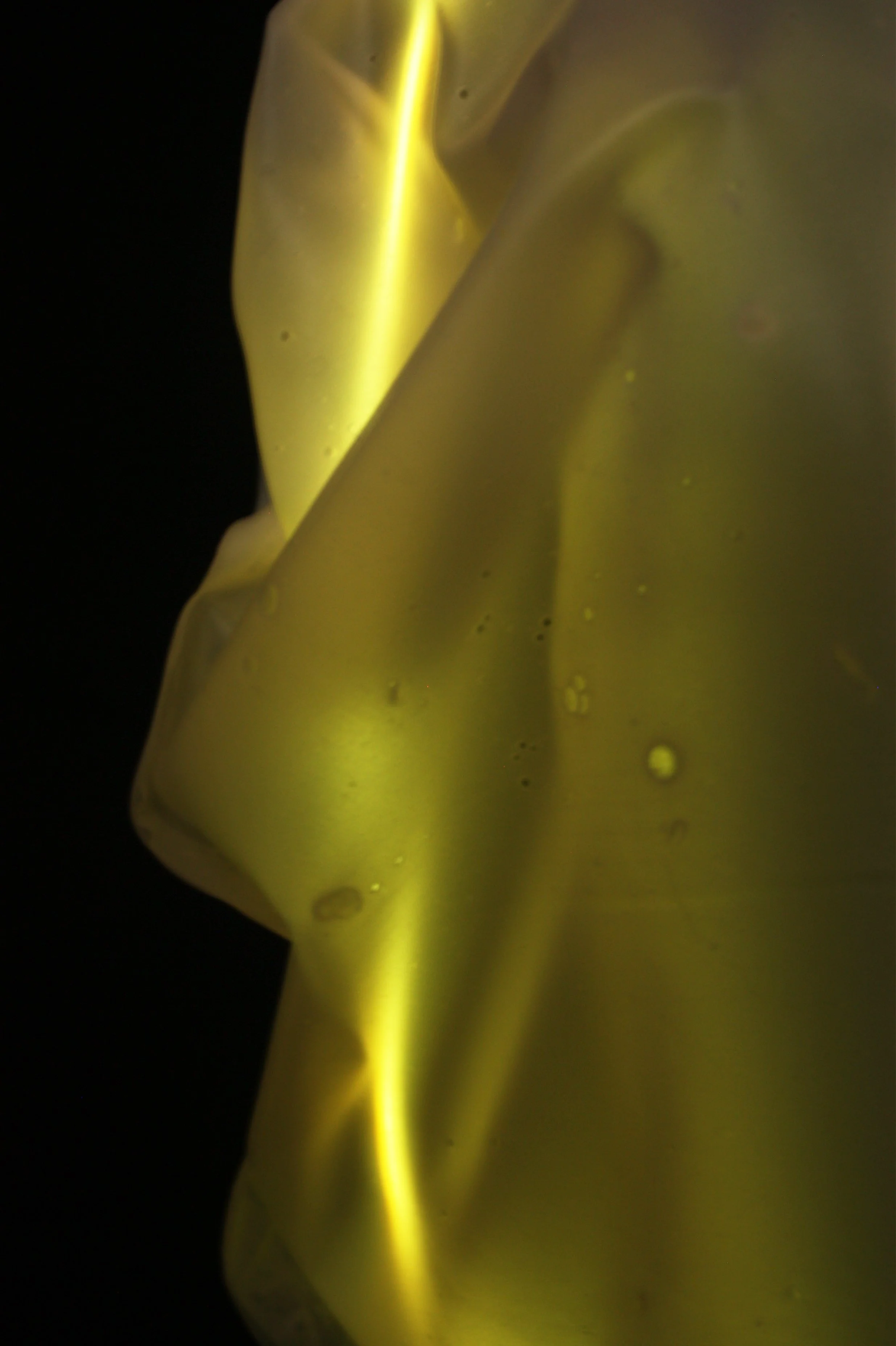
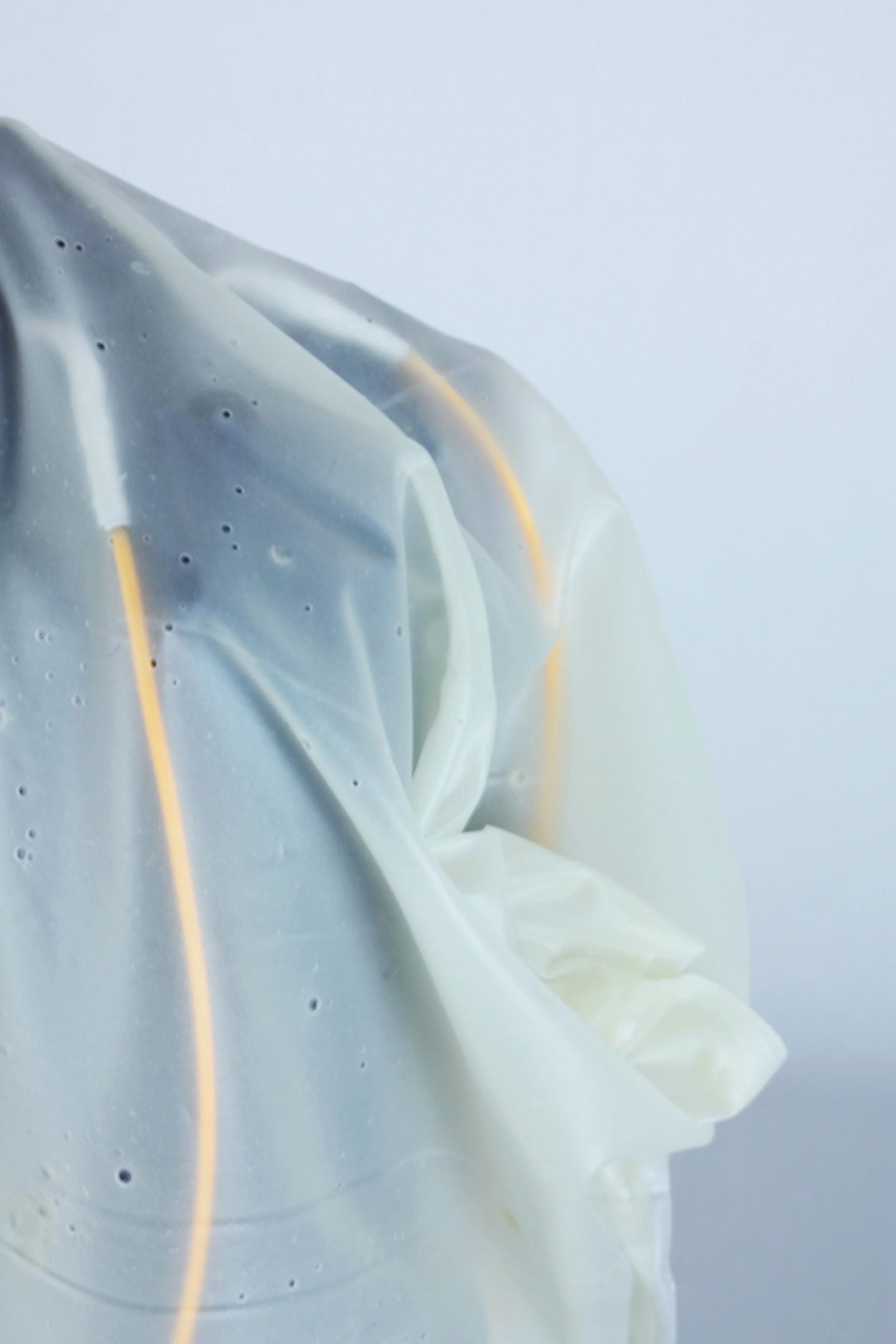
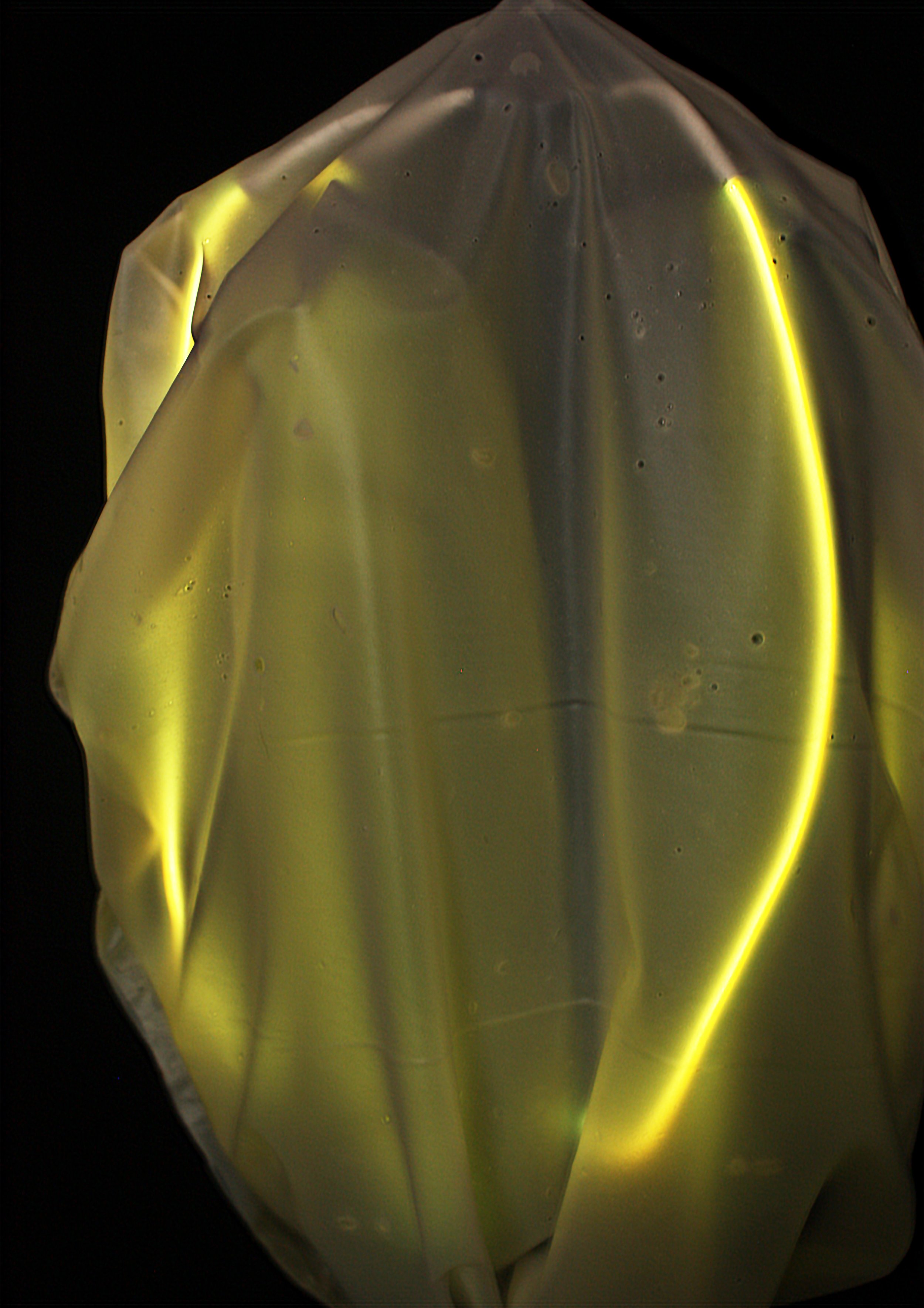
Across the surface, the bio-plastic membrane holds subtle irregularities—tiny bubbles, stretched textures, and variations in thickness. These details catch and diffuse light unevenly, creating moments of concentration and dispersion.
The LED lines, distributed across different spatial layers, resemble a network of fibers or veins. They do not follow a singular logic, but instead form a complex, almost organic system—suggesting growth that is not linear, but branching and adaptive.
Light refracts through the membrane and around these lines, producing faint shadows and reflections that shift with movement, reinforcing the sense of a living, breathing structure.
As the hand approaches and touches the surface, the membrane subtly yields. The interaction is minimal, yet intimate. The piece responds not through mechanics, but through perception—softness, resistance, and the diffusion of light.
This moment emphasizes the work not as a fixed object, but as a sensitive interface between body and material.
In this piece, light is no longer centralized—it disperses, circulates, and lingers across layers. The work captures a state where life is not yet fully formed, but already in motion. Between structure and softness, visibility and concealment, it invites a slower attention—one that senses rather than defines.